When Israel announced in December 2025 that it would become the first country to recognise Somaliland as a sovereign state, the reaction was swift and indignant. Protests broke out in Mogadishu, accompanied by vitriolic rhetoric across Somali social media, condemning both Somaliland for embracing Israeli recognition as well as Israel for intruding in Somali affairs. Twenty-one UN member states, including many from the Arab League and the African Union, condemned the move and reaffirmed their support for Somali unity under the government in Mogadishu. The Palestinian Authority, alongside numerous Palestinian commentators, echoed this position, questioning Somaliland’s claims to self-determination by pointing to Israel’s involvement and Somalia’s strong support for Palestine. Yet the intensity of the backlash revealed less about Somaliland itself than about the fault lines and hierarchies embedded within the international system.
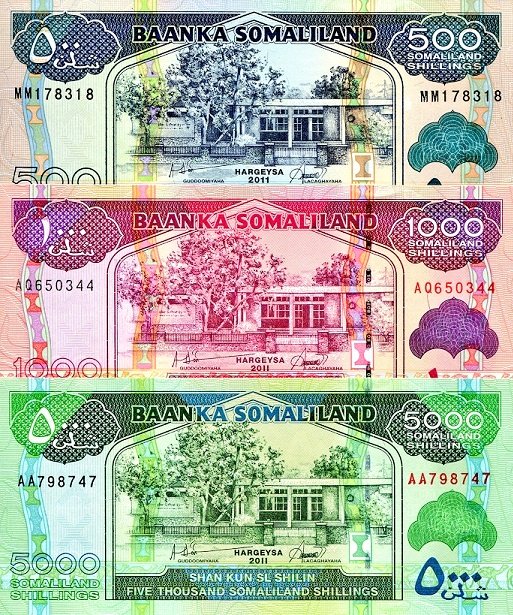
Though Somaliland declared independence in 1991, in the more than three decades since, its existence has been marked by ambiguity. It has functioned as a de facto state—governing territory, holding multiparty elections, maintaining its own security apparatus and currency, and sustaining relative political and economic stability— all while being denied formal recognition by the very international order that nonetheless selectively engages Somaliland as a de facto authority and expects it to uphold the responsibilities associated with sovereignty. This paradox has deep historical roots. During the colonial period, Somali territories were divided between European powers, most notably British Somaliland in the north and Italian Somaliland in the south, before a hasty union in 1960 following both territories’ independence. That unification, celebrated as a triumph of pan-Somali nationalism, was far more ambivalent within the former British protectorate.
Over time, political marginalisation, economic neglect, and violent repression of northern populations under the regime of Siad Barre escalated into catastrophe: government forces carried out aerial bombardments of cities such as Hargeisa in 1988, killing tens of thousands of civilians, flattening neighbourhoods, and driving hundreds of thousands into displacement. Somaliland’s 1991 declaration of restored independence followed not an abstract secessionist impulse, but the collapse of a state that had systematically targeted its own people. Since then, Somaliland has constructed functioning institutions and maintained relative internal order. Yet it remains suspended in juridical limbo. It is expected to secure its borders, combat piracy, prevent terrorism, hold credible elections, and comply with international norms, while being excluded from the diplomatic, financial, and legal frameworks that formal recognition provides.
This is not primarily a story of Somaliland suddenly discovering Israel, nor of Israel altruistically discovering Somaliland.
Political limbo of this kind does not produce neutrality; it produces vulnerability. And vulnerability generates strategic openings. Israel’s move toward recognising Somaliland must therefore be understood within this broader architecture of exclusion. This is not primarily a story of Somaliland suddenly discovering Israel, nor of Israel altruistically discovering Somaliland. It is about how diplomatically isolated entities and strategically ambitious states encounter one another in the margins of an unequal international order, where recognition becomes currency, and isolation becomes leverage.
Somaliland’s predicament echoes that of other unrecognized or partially recognised polities. The de-facto state of Tamil Eelam, which administered large parts of the Tamil homeland in the North-East of the island until the LTTE’s military defeat in May 2009, likewise maintained functioning civil institutions, courts, taxation systems, and territorial governance without ever receiving international recognition. Like Somaliland, it was expected to comply with international norms and humanitarian standards while being excluded from the very system that defines, interprets, and enforces those norms. This exclusion carried tangible consequences. Deprived of diplomatic recognition, formal trade channels, and lawful access to arms markets, the LTTE was compelled to operate through clandestine networks and controversial partnerships. These included procurement channels reportedly involving North Korea, as well as military and political cooperation with diplomatically marginalised states such as Eritrea. In Eritrea’s case, these alliances drew on historical solidarities between the Eelam Tamil and Eritrean liberation movements that predated Eritrea’s independence. In the case of North Korea, they reflected the LTTE’s severely constrained options for self-defence against a state that was itself heavily armed by the international system. These relationships were later invoked as evidence of the LTTE’s illegitimacy, yet they were largely a predictable outcome of structural isolation: when access to formal political, economic, and security channels is systematically blocked, engagement is forced to the margins, and those very margins are then used to justify continued exclusion.
De-facto states are routinely denied recognition not because they lack institutional capacity or internal legitimacy, but because their admission would unsettle entrenched geopolitical arrangements.
In both cases, isolation was not incidental but structurally produced. De-facto states are routinely denied recognition not because they lack institutional capacity or internal legitimacy, but because their admission would unsettle entrenched geopolitical arrangements. They are disciplined for existing beyond the cartography sanctioned by the international order. When such entities seek allies, they do so from a constrained position. They do not have the luxury of prioritizing ethics, but instead must operate within the confines of pragmatism. Sanctions, embargoes, blockades, and diplomatic silence compress their field of manoeuvre. Under these conditions, recognition—any recognition—acquires disproportionate symbolic weight and strategic value. It is precisely this structural vulnerability that creates openings for external actors, like Israel, to engage selectively, exploiting diplomatic margins to advance their own strategic objectives.
This logic also shapes the broader discourse around potential scenarios involving disenfranchised territories. Even speculative proposals, ranging from third-party territorial arrangements, such as access to resources and geopolitical vantage points, to the potential resettlement of Palestinians from Gaza to Somaliland, demonstrate how questions of territory, sovereignty, and demographic control are continuously instrumentalised within regional bargaining frameworks. Whether these scenarios are realised or remain hypothetical, they illuminate the predictable ways in which diplomatically isolated polities are drawn into strategic games not of their own making. Such manoeuvres are not uniquely cynical; they reflect realpolitik at work: scrupulous, opportunistic, and calculated to maximise advantage. Ultimately, the structural conditions of isolation imposed by an unequal international order shape the decisions of all actors, whether de-facto states like Somaliland and formerly Tamil Eelam or recognised yet constrained entities such as the Palestinian Authority. The more uncomfortable question is not why Israel exploits openings, but why such openings exist in the first place.
To single out Somaliland for moral condemnation while ignoring the structural constraints that shaped its choices is both politically superficial and analytically misleading. For over three decades, Somaliland has pursued international recognition, only to encounter dismissal, neglect, or outright silence. Had even minimal recognition been extended earlier by African, Arab, or Western states, the incentive to seek legitimacy through Israel would have been far less pronounced. Selective outrage obscures this reality: marginalised political entities, regardless of cause, are frequently compelled into compromise by the structural inequalities of the international system. The Palestinian leadership itself, despite the legitimacy of its struggle, has historically formed pragmatic alliances with states whose human rights records are deeply contested, many of which retain occupied territories and colonies of their own. But unlike the homelands of Somalilanders and Eelam Tamils, Palestine enjoys a privileged position: it is recognised by many states, maintains formal diplomatic representation across the world, and participates in international fora. This recognition provides it with leverage, protections, and alternative avenues for negotiation that de-facto states simply cannot access. Palestine’s position within the international system allows it to operate differently, making comparisons with the proto-states of Somaliland or Tamil Eelam analytically misleading. And its strategic alliances are rarely viewed as undermining Palestinian self-determination. Yet when Somaliland navigates even more constrained terrain, its political legitimacy is suddenly called into question.

This structural critique becomes even sharper when considering the selective moral posturing of actors in Mogadishu and beyond. Governments and commentators who loudly champion Palestinian self-determination frequently deny the same right to Somalilanders. This double standard exposes a hierarchy of suffering, sovereignty and recognition. Israeli violence and Palestinian dispossession are often treated as exceptional, as if existing in isolation, rather than embedded within a broader global system of power, militarisation, and imperial allegiances. That framing is politically convenient. It allows one moral metric to be applied to Israel and Palestine, while a different or nonexistent metric governs the evaluation of other peoples struggling for recognition. This comparison reveals that sovereignty in practice is not determined by governance capacity, electoral legitimacy, or adherence to international norms, but by the interests of those already inside the system. Recognition is dispensed according to power, not principle. This insight was tragically evident in the case of the former Tamil state on the island. The absence of formal political recognition and meaningful international guarantees amplified its vulnerability, narrowing diplomatic options and facilitating conditions under which mass violence could occur with limited external intervention. The lesson is not that recognition guarantees protection, but that systematic exclusion compounds precarity and constrains the strategic choices of de facto polities.
Much of the debate around Somaliland collapses into moral absolutism: Israel is cast as uniquely reprehensible, and therefore any engagement with it is treated as uniquely condemnable. Exceptionalizing Israeli actions in this way, while ignoring comparable realpolitik manoeuvres elsewhere, distorts analysis. It substitutes structural critique with selective indignation and obscures the broader patterns that shape recognition, sovereignty, and strategic behavior. Abandoning the language of uniqueness yields substantial analytical insight. It reveals that de-facto-states are incentivized to seek recognition wherever it is offered; that powerful states routinely instrumentalize contested and marginalized territories for strategic gain; and that international law is unevenly applied, shaped by hierarchy and interest rather than universality. Under these conditions, even imperfect gestures of recognition can carry outsized symbolic and strategic meaning. A political community that has spent decades striving for acknowledgement cannot reasonably be faulted for embracing openings that others, secure in their own sovereignty, might dismiss as dubious.
And so the cycle persists: isolation breeds desperation; desperation invites opportunism; opportunism triggers outrage; outrage ignores the structural cause.
When Kenneth Roth, a former Human Rights Watch executive director, dismissed Somaliland’s recognition by Israel by pointing to the far greater number of states that recognise Palestine, the implication was clear: legitimacy flows from diplomatic accumulation. But that argument sits uneasily beside the principle of self-determination itself. If Palestinian claims to statehood are not contingent on universal recognition, if their right inheres in the people rather than in the number of embassies that affirm it, then the same reasoning must apply to Somalilanders. A people’s claim to self-rule does not gain legitimacy through diplomatic endorsement, nor is it erased in its absence. Recognition is a tool of international politics, not a prerequisite for rights. To understand Somaliland’s pursuit of legitimacy through Israel, and the critiques it provokes, we must situate it within these structural realities: decades of exclusion, constrained agency, and an international system that rewards power and punishes marginality. Only then can the choices of de facto states be interpreted not as moral failings, but as the predictable outcomes of a world order that consistently privileges some actors while constraining others. If other states truly objected to Israel gaining influence through recognition, they could neutralise that leverage by extending recognition to Somaliland themselves. They do not. And so the cycle persists: isolation breeds desperation; desperation invites opportunism; opportunism triggers outrage; outrage ignores the structural cause.
The controversy over Somaliland and Israel reveals less about either actor in isolation than about the architecture of global sovereignty itself. De-facto-states like Somaliland and, historically, Tamil Eelam, inhabit a system that penalises them for existing beyond formally sanctioned channels while denying them any meaningful pathway to enter those channels. They are judged against standards of statehood that they are structurally prevented from fully accessing, suspended between expectation and exclusion. Recognition, in such a system, becomes currency, a survival strategy, and political leverage simultaneously. Somaliland’s willingness to accept recognition from Israel is therefore less a moral deviation than a pragmatic response to decades of exclusion. Criticising that choice while leaving intact the order that made it consequential is not principled; it is evasive. The real question is not why Somaliland might accept recognition from Israel, nor why the former Eelam Tamil State sought alliances that seemed controversial to outsiders. The more pressing question is why, after years of diplomatic silence, a single gesture of recognition carries such disproportionate weight, compelling marginalized polities into decisions that established states, secure in their status, never have to confront.
At its core, the story of Somaliland, like that of the former de-facto state Tamil Eelam, is a story of a world that punishes those who exist outside its sanctioned maps. It is a story that reveals the hierarchies that determine whose sovereignty is affirmed, whose is deferred, and whose is denied altogether. In such a system, marginalized polities are forced to maneuver within constricted spaces not of their choosing. To fault them for navigating the few openings available is not an act of justice; it is acquiescence to the very framework that engineered their precarity. It is arrogance. Recognition, when it arrives, is not a benevolent gift bestowed by the powerful. It is the outcome of strategic calculation on one side, and, on the other, the irrepressible determination of a people to persist, to govern themselves, and to endure despite prolonged denial.