As the new country progressed through the second half of the 20th century, state-sanctioned anti-Tamil violence became too frequent to count. The first anti-Tamil pogroms and act of ethnic cleansing in post-independence Ceylon happened in 1956, with the most serious violence in a remote area settled by Sinhala colonisers in the east of the Tamil homeland.The racial violence in the valley of the river Gal Oya (Paddipalai Aaru in Tamil) was an effect of increasing anti-Tamil rhetoric amongst then-Ceylon’s rulers and clergy in the aftermath of independence in 1948. As the state sought to solidify the grip of Sinhala-Buddhism on its institutions, it passed the Sinhala Only Act in 1956, amidst vociferous protests by Tamils. The Act made Sinhala the sole official language, which meant government employees were required to be proficient in the language and all government services were provided in Sinhala. State-services and forms were in Sinhala, in effect excluding Tamils, and Tamil-speaking public servants who did not know Sinhalese were forced to resign.
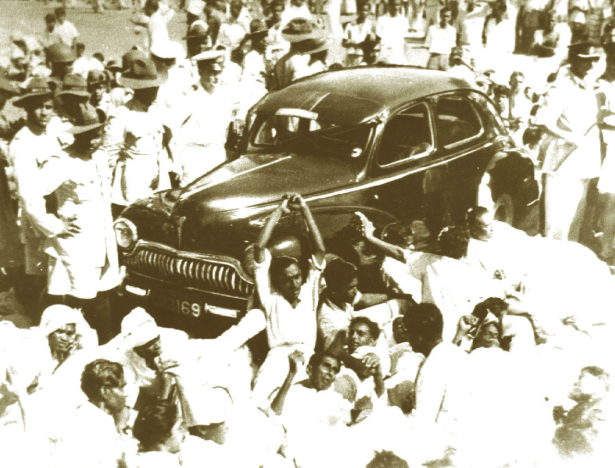
In response, Tamil-speakers protested. The Federal Party (ITAK) mobilised across the North-East, leading demonstrations and rallies. As parliament assembled to debate and pass the act in June 1956, around 300 members of the party, led by Chelvanayakam, embarked on a ‘Satyagraha,’ non-violent, protest on Colombo’s Galle Face Green. The Tamils were attacked by a Sinhala mob with rocks and clubs, led by the MP KMP Rajaratne. As the police watched on, several of the ITAK MPs were injured and some were flung into Beira Lake. When they called off the protest and sought refuge inside the parliament, then President Bandaranaike is said to have greeted the injured protestors with, “You got what you deserved.”
But the violence didn’t end there. Urged on by their politicians, who also ensured the police did not get involved, the mobs rampaged through Colombo, looting and burning Tamil businesses and assaulting any Tamil they came across. The violence against Eelam Tamil protestors spread from Galle Face Green to other parts of Colombo. Tamils were dragged out of cars and beaten by Sinhala mobs. With the effective support of the state, the mob targeted and looted over 150 Tamil-owned businesses. The police still did not interfere, confirming later that they were instructed by their superiors to stand by. The pogroms escalated to different parts of the island over a number of days, especially in the Gal Oya colony in the North-East.
The Valley
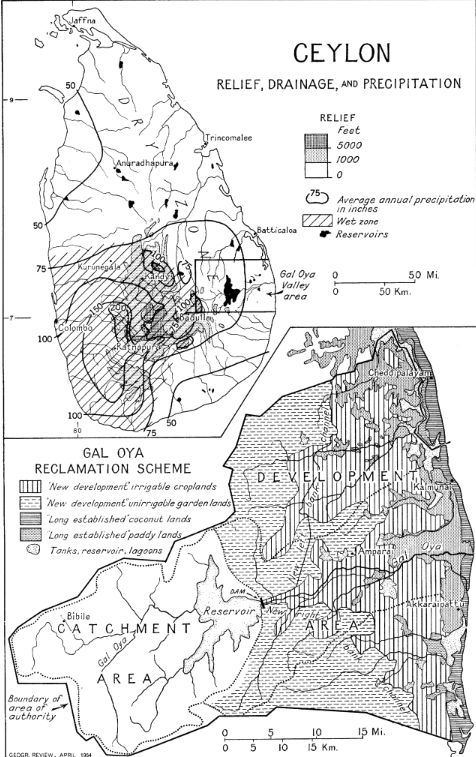
The Gal Oya valley became the centre of the 1956 pogroms due to a combination of factors that made the area a powder keg. The settlement scheme was established in the west of today’s Amparai district, part of the region claimed by Eelam Tamils as their homeland. It lies on the administrative boundary to the Uva Province and marks the transition from the highlands to the dry zone. The valley was remote and undeveloped at the time. In 1949, the Gal Oya Settlement Scheme was the first of many settler colonies established on the back of irrigation projects in the newly independent Ceylon. The Eelam Tamil claim to a homeland in the island’s North-East was perceived as the biggest threat to the Sinhala-Buddhist ethnocracy. Consequently, the state pursued various violent and non-violent strategies to disrupt the Tamil dominance in the North-East. Tamils were targeted for commercial and social dispossession. So-called development projects played an important role in this dispossession, resulting in land grabs, ethnic cleansing and, rather than improving their socio-economic conditions, in fact impoverished Eelam Tamils.
Development projects in the border region between the Tamil-majority and Sinhala majority areas were promoted by the state as a “return” to the glorious Sinhala kingdoms, invoking the three pillars of traditional Sinhala society – the irrigation tank, the paddy field and the (Buddhist) temple. The first prime minister of Sri Lanka, DS Senanayake was quite explicit in positing Sinhala colonists as being on the frontier of Sinhala civilisation. Generous subsidies were provided to colonists who were willing to settle in areas often far from their homes.
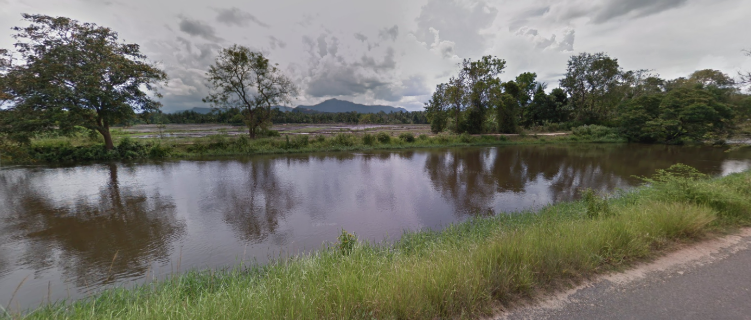
The Gal Oya irrigation project was one such scheme and would see the building of a dam across the Gal Oya river by an American firm, in addition to a hydroelectric power plant by a Canadian firm. The two irrigation channels flowing from the dam traverse the Batti-Amparai region from west to east. The area marked for development was, until then, sparsely populated by Tamils, Muslims, and Veddahs. The project would irrigate 95,000 acres of land and led to the settlement of 80,000 Sinhalese in this majority Tamil-speaking area.
The colonists were drawn partly from Sinhalese villagers who were displaced by the flooding that came with the construction of the dam and others were landless Sinhalese peasants from further inland. Some Tamils and Muslims native to the region were also settled in the far end of the valley, closer to existing Tamil-speaking towns and villages. Settling Sinhalese peasants in this area undercut the Tamil-speaking majority of the broader region, with Eelam Tamils now made numerically the smallest of the three major groups in Amparai. Out of 43 colonies initially built, at least 36 were Sinhalese. Sinhala colonisers had access to better land and more water. Their settlements were separate from the Tamils and Muslims, built closer to the dam in the upper valley, with access to plenty of water, while the Tamil-speakers were given land further downstream, closer to the coast, on less well irrigated paddy land. The state built and ran plantations and factories near the Sinhalese settlements, which used up water supplies for Tamil and Muslim farmers engaged in paddy farming further downstream.
Tensions were high in the region, with Tamils in Batticaloa protesting the arrival of these colonists, who were then provided military protection as they travelled onwards to their settlements. The vocal, and justified, opposition to Sinhalese state-sanctioned colonisation started forming cracks in the manufactured veneer of political supremacist rhetoric, causing the hostility to increase. A large number of Tamil officials, bureaucrats, and administrators also moved to the upper valley’s industrial hubs, not as settlers but as part of the technical workforce of the Gal Oya Development Board, including at Inginiyagala, Amparai Town and the factories in the area. These Tamils faced the brunt of the violence that was to come.
The violence
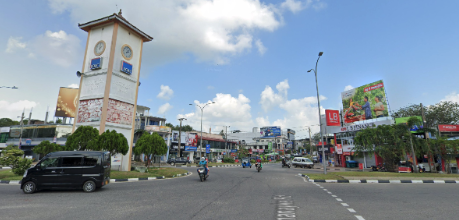
It took a few days before the news of the violence at the Satyagraha protest in Colombo reached other parts of the country and was met with outrage by Eelam Tamils. In Batticaloa, 10,000 people protested against the attacks on the peaceful protestors in Colombo. A Sinhala-owned hotel was burned in the melee, with an employee shooting and killing two Tamil protesters. The police also opened fire on the crowd and killed two more Tamils. The tensions were exacerbated byrumours about the rape of a Sinhalese woman by Tamils, later refuted as untrue by the police. This proved to be the spark that ignited the powder keg in the Gal Oya Valley. On June 11, groups of Sinhala colonists and labourers gathered and hunted down Tamils in the upper valley, beating them and burning down Tamil businesses and offices. Another false rumour of a 6,000 strong Tamil army advancing on the colonies also spread, causing more Sinhalese to arm themselves with dynamite and guns, commandeering government vehicles to attack the Tamils in the upper valley. State infrastructure was systematically used by the mobs to carry out their pogrom, including by seizing the Gal Oya Development Board’s lorries, tractors and bulldozers and using them to transport rioters. They also raided the development board’s storage facilities, stealing dynamite and firearms. Tamil refugees from the upper valley fleeing the area on buses towards Batticaloa and other Tamil-majority areas were ambushed by the mobs.The majority of Tamils were killed in the violence in the upper valley. The rioters also attacked the Tamil settlements in the lower valley, but some of the Tamil settlers fought back. The violence continued until June 15, when military reinforcements arrived.
Sinhalisation and the “Anti-Development Machine”
The ethnic cleansing of several thousands of Tamils from this region is an often underreported facet in the commentary on these pogroms, which often treat the periodic outbreaks of violence as isolated incidents. Instead of protecting the Tamils where they lived, the military organised convoys to transport thousands of Tamils out of the main hotspots. Though some of the refugees returned, they faced renewed violence in during the 1958 pogroms and were forced to flee again. The few that returned to claim their land after that, were chased away for good by the Sri Lankan military in 1990. Today, the Tamil population in the three divisional secretariats that cover the upper valley, Damana, Amparai and Uhana stands at less than 1% and in the entire Amparai district. The settlers and their descendents now number over 250,000 with Tamils now the smallest demography of the three major groups.
This is a pattern that is manufactured and repeated across the North-East. The demographic status of Tamils, particularly in the Trincomalee and Amparai are under severe threat. Vavuniya and Mullaithivu are other districts on the border targeted for Sinhala settlements. Some colonisation projects are similar in scale to the one in the Gal Oya valley, such as the Mahaweli Scheme, which resulted in a new Sinhala division carved out of the Tamil Manal Aaru. The state’s ethnic cleansing in Manal Aaru saw 64 Tamil villages cleared by the military. The area is now Sinhalised and officially called Weli Oya, a new administrative area in the prior almost entirely Tamil district of Mullaithivu. Buffeted by the military, Sinhala colonisers have made this area on the narrow territory connecting the Northern and Eastern Provinces their home.
Other Sinhalisation efforts are smaller scale, but no less insidious. The entire state machinery is deployed to change the demography of the North-East and undermine Eelam Tamils’ majority status in their homeland. The military holds civilian and state land claiming security concerns. The archeology ministry and the Buddhist clergy at will declare Tamil land sacred to Buddhists, building temples and encouraging Sinhala settlers to move to such areas. Since independence this has reduced the proportion of Eelam Tamils in the North-East, and, with the increasing number of Sinhalese settlers, has returned Sinhala MPs from areas that traditionally were represented by Tamils in Sri Lanka’s parliament.
While it appears that the state has been somewhat successful in their aim of changing the demographics of the North-East, significantly, the stated aim of the colonisation projects - economic development - has failed, and with it, perhaps, the sustainability of these colonies. In a recent report, PEARL describes the Sinhalisation efforts as an “anti-development machine”. Sinhalisation has “inhibited and obstructed actual processes of development.” These resource intensive irrigation and colonisation projects have failed to produce returns on the significant amounts of capital invested in them.
The entire state machinery is deployed to change the demography of the North-East and undermine Eelam Tamils’ majority status in their homeland.
An evaluation of the project in 1970 found that the “ex post benefit/cost ratio for the Project was 0.5, with discounted costs exceeding benefits by Rs. 277 million.” It further said that “even if capital had been available at zero interest rate, the Project would not have paid its way.” Schemes like the Gal Oya and Mahaweli development projects also failed to produce productive agricultural communities. According to Robert Muggah’s study on resettlement in Sri Lanka, the schemes earned a “miserable reputation due to their lacklustre social amenities and line services, inefficient irrigation management and weak culture of community participation,” and for “discontent, vice and poverty.” During the war, the security forces also used these Sinhala civilians as a buffer on the borders to the LTTE-controlled territory.
The Gal Oya pogroms are a key moment in Sri Lanka’s short history. At that time, Eelam Tamils could not have imagined that future anti-Tamil violence would escalate to genocidal levels, although the signs were there. Threatened by Tamil nationhood, the ethnocratic state weaponised its structures and institutions ever more effectively to subjugate Tamils and minorities such as Muslims and Malayaka Tamils, in an attempt to force them to accept Sinhala-Buddist supremacy. Eelam Tamil refusal to accept this resulted in the long war for self-determination. But the cost of Sri Lanka’s war against Tamils is borne also by the Sinhalese, as their state prioritises keeping Tamils in check over prosperity of its people. Sri Lanka’s development projects act as tools of structural violence rather than enable economic advancement, impoverishing the country and its people. The Gal Oya pogroms can be taken as the starting point of the state’s effort to crush this Tamil resistance and betray its willingness to allow, enable and also perpetuate unchecked violence, as amply demonstrated over the subsequent decades. The violence here proved to Tamils what they feared since before independence and ultimately caused them to seek a separate Tamil Eelam - Sri Lanka as a Sinhala-majoritarian state will remain in conflict with the Tamil presence on the island until they are permanently subjugated.